
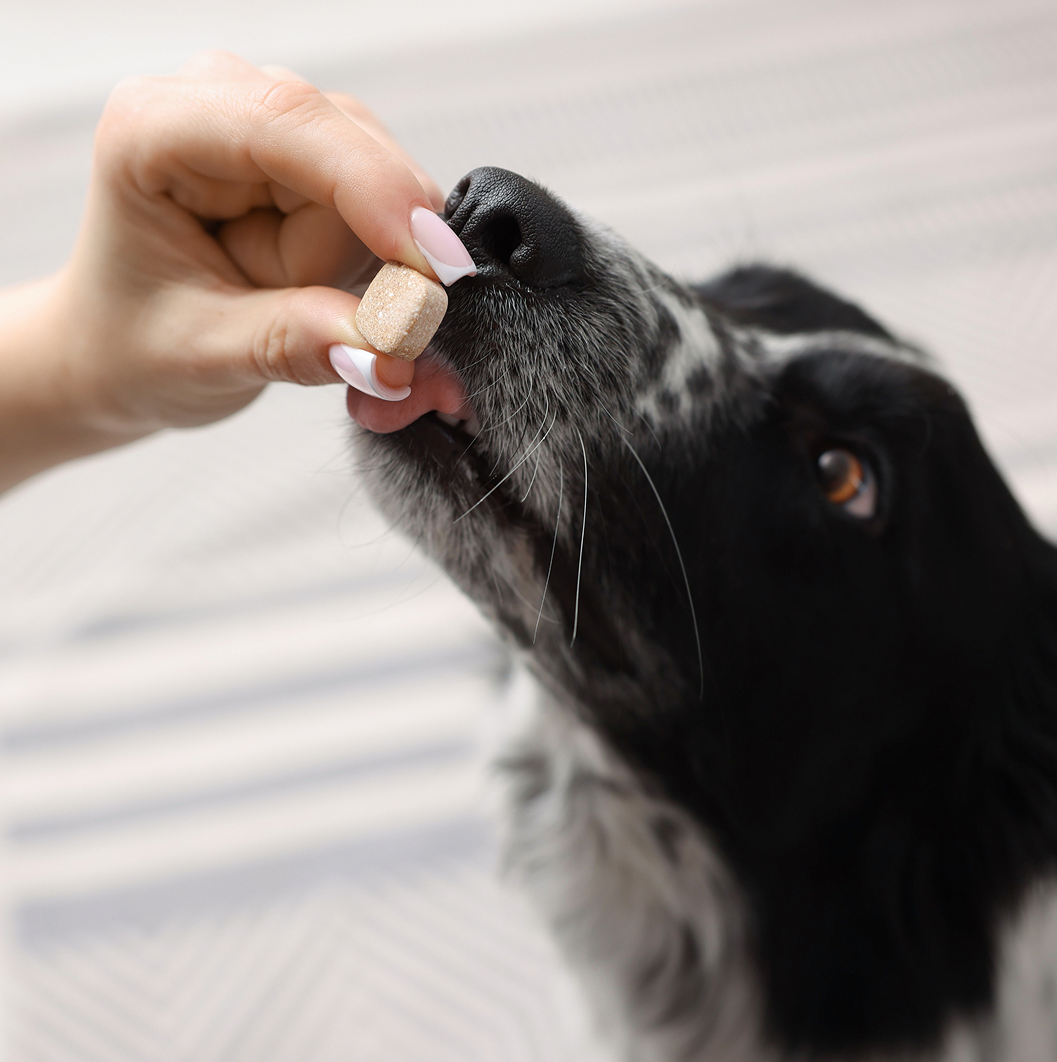
Vitamin D is directly related to calcium and phosphorus metabolism and plays a role in mechanisms essential for the body’s homeostasis. In dogs and cats, however, there is a key difference: the skin’s ability to synthesize vitamin D is limited, making the diet the primary source of this nutrient.
This makes laboratory testing particularly important in certain clinical situations.
But when should a vitamin D test actually be ordered? Which test should be used? And why might PTH be important for interpreting this result?
In this article, we’ll explore how vitamin D metabolism works in dogs and cats and what insights 25(OH)D can provide in clinical investigations.
Why is vitamin D important for dogs and cats?
Although it is often associated solely with bone health, vitamin D plays a role in much broader processes. It is primarily involved in regulating calcium and phosphorus homeostasis and is also linked to immune and inflammatory mechanisms.
Vitamin D metabolism occurs in several stages and primarily involves the liver and kidneys. To put it simply:
Vitamin D → 25(OH)D → 1,25(OH)₂D
The first step produces 25-hydroxyvitamin D [25(OH)D], also known as calcidiol. It is this form that should be used to assess a patient’s vitamin D status. The second step, on the other hand, produces 1,25-dihydroxyvitamin D [1,25(OH)₂D], or calcitriol, which is the biologically active form.
But what's the difference between them?
| Bookmark | Name | Main application |
| 25(OH)D | Calcidiol | Assessment of Vitamin D Status |
| 1.25(OH)₂D | Calcitriol | Evaluation of the biologically active form and specific regulatory mechanisms |
Important note: To assess vitamin D levels or status, the test of choice is the 25(OH)D test, not the calcitriol test.
Why do dogs and cats rely on their diet for vitamin D?
In humans, exposure to ultraviolet radiation contributes to the skin’s synthesis of vitamin D. In dogs and cats, this production is limited and does not represent a physiologically significant source of vitamin D. Therefore, diet plays a key role in providing this nutrient.
Vitamin D in the diet is primarily found in the following forms:
- Vitamin D₂ (ergocalciferol)
- Vitamin D₃ (cholecalciferol)
Vitamin D₃ is the predominant form in the diets of dogs and cats. In the vitamin D test performed by Hormonalle, the levels of vitamins D₂ and D₃ are not reported separately. The result corresponds to the total concentration, which is the sum of the two forms.
After intestinal absorption, these forms undergo a series of metabolic steps leading to the formation of 25(OH)D and, subsequently, calcitriol. This means that changes in intake, absorption, or metabolism can influence a patient’s vitamin D status.
When should you consider testing 25(OH)D levels?
This test does not need to be ordered indiscriminately for all patients. It may be considered when there is a specific clinical question related to vitamin D metabolism or when certain conditions may interfere with this balance.
Situations in which the assessment may be relevant
Dietary changes: especially when there are significant changes in eating habits or the use of diets that require an individualized nutritional assessment.
Chronic kidney disease: Vitamin D metabolism is directly related to the calcium-phosphorus-PTH axis, which undergoes changes as kidney disease progresses.
Gastrointestinal diseases: Changes in intestinal absorption can affect nutrient availability.
Inflammatory diseases: Reduced levels of 25(OH)D have been reported in various inflammatory conditions.
Neoplasms: Changes in vitamin D concentrations have also been investigated in patients with various neoplastic diseases.
Atopic dermatitis: The relationship between vitamin D and immune mechanisms has also been studied in patients with skin diseases.
Long-term use of glucocorticoids: medication history should be taken into account when evaluating patients with abnormalities in bone and mineral metabolism.
Low 25(OH)D: What does this result mean?
The concentration found must be considered in light of the patient's medical history, diet, comorbidities, medications, and other markers related to mineral metabolism.
It is in this context that PTH 1-84 can provide important information. PTH plays a role in regulating calcium and phosphorus and responds to changes in this balance. Therefore, evaluating both together can provide a more complete picture of the patient.
A comprehensive assessment may include:
| Exam | What it evaluates |
| 25(OH)D | Vitamin D Status |
| PTH 1-84 | Parathyroid Response |
| Ionized calcium | Biologically active fraction of calcium |
| Phosphorus | Mineral balance |
The more comprehensive the evaluation, the greater the ability to correlate the laboratory result with the clinical question.
Vitamin D and Kidney Disease: Why Does This Relationship Deserve Attention?
In patients with chronic kidney disease, mineral metabolism undergoes progressive changes. The kidneys play a role in converting vitamin D into its biologically active form and are also directly involved in phosphorus regulation.
As kidney disease progresses, changes occur in the axis:
Vitamin D ↔ PTH ↔ Calcium ↔ Phosphorus
They may contribute to the development of mineral and bone disorders associated with chronic kidney disease. Therefore, in these patients, evaluating vitamin D levels alone may not be sufficient.
In clinical practice, it is worth considering:
✦ Stage of kidney disease
✦ Phosphorus concentration
✦ Calcium, especially ionized calcium when indicated
✦ PTH
✦ 25(OH)D
✦ Nutritional History
✦ Medications currently being taken
This integrated assessment helps put the results into context and guide the research.
The Role of the Laboratory in Research
Assessing vitamin D metabolism requires not only the appropriate choice of analyte, but also a reliable methodology and an interpretation that addresses the clinical question.
At Hormonalle, the following test levels are available: 25-OH Vitamin D (calcidiol) and PTH 1-84are available, allowing veterinarians to conduct a more comprehensive evaluation of their patients’ mineral metabolism.
The integration of different markers can contribute to a more comprehensive assessment and safer clinical decision-making.
Bibliographic References
HOW, K. L.; HAZEWINKEL, H. A. W.; MOL, J. A. Dietary vitamin D dependence in cats and
dog due to inadequate cutaneous synthesis of vitamin D. General and Comparative Endocrinology, 1994.
ZAFALON, R. V. A. et al. Vitamin D metabolism in dogs and cats and its relationship to diseases not associated with bone metabolism. Journal of Animal Physiology and Animal Nutrition, 2020.
MELLANBY, R. J. Beyond the Skeleton: The Role of Vitamin D in Companion Animal Health. Journal of Small Animal Practice, 2016.
BRITO GALVÃO, J. F. et al. Interactions between calcitriol, calcidiol, parathyroid hormone, and fibroblast growth factor-23 in chronic kidney disease. Journal of Veterinary Emergency and Critical Care, 2013.
FAQ
Which test should I request to measure vitamin D levels in dogs and cats?
25(OH)D, also known as calcidiol, is the primary marker used to assess vitamin D status. Calcitriol serves a different function and does not replace 25(OH)D in this assessment.
Does a low vitamin D level mean the patient needs supplementation?
Not necessarily. The results should be interpreted in light of the patient’s clinical condition, diet, comorbidities, medications, and other markers of mineral metabolism. The need for supplementation should be evaluated on a case-by-case basis.
Why test PTH along with vitamin D?
PTH plays a role in regulating calcium and phosphorus metabolism. Measuring PTH levels can provide additional insight into 25(OH)D levels, especially in patients with mineral metabolism disorders or kidney disease.