
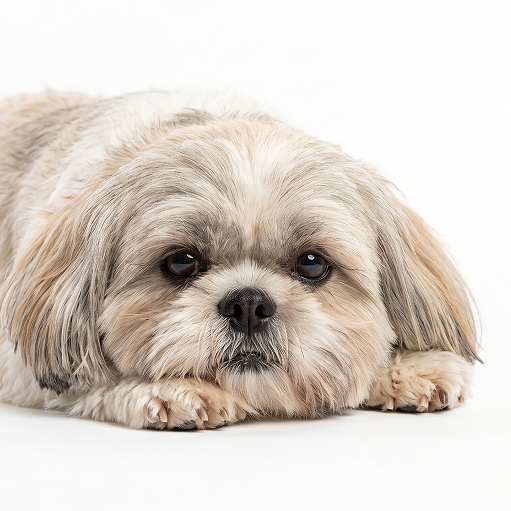
Cushing's Syndrome in Shih Tzus: Breed Predisposition and the Importance of Hormonal Testing
Changes such as increased water intake, increased urination, weight gain, and changes in the skin and coat are signs frequently observed in routine veterinary practice with dogs. However, when these signs are present in breeds with an endocrine predisposition, such as the Shih Tzu, these findings may indicate hormonal changes that require further investigation.
H hypercortisolism in dogs, also known as hyperadrenocorticism or Cushing’s syndrome, is a highly significant endocrine disorder in veterinary medicine, particularly in middle-aged to elderly dogs.
Although it can occur in different breeds, small dogs, including the Shih Tzu, are more frequently affected by the disease in clinical case reports, underscoring the importance of hormonal evaluation when clinical signs are present.
Endocrine predisposition in the Shih Tzu breed
Dogs of the Shih Tzu are overrepresented in clinical case reports related to endocrine disorders, which are often associated with skin and metabolic.
This racial predisposition does not mean that all animals will develop hormonal disorders, but it underscores the need for a thorough clinical evaluation when signs consistent with endocrine disorders are present.
Persistent skin changes, changes in body weight, reduced activity, and metabolic changes may indicate the need for an evaluation of the endocrine system.
What is hypercortisolism in dogs?
The hypercortisolism is a condition characterized by the body’s chronic exposure to high concentrations of cortisol, regardless of the cause of the hormonal imbalance.
Cortisol plays a role in various physiological processes, including energy metabolism, the stress response, and immune regulation. However, when present in excess for prolonged periods, it can cause significant systemic changes.
The condition occurs most frequently in middle-aged to older dogs and may be related to changes in the hypothalamic-pituitary-adrenal (HPA) axis or to prolonged use of glucocorticoids.
What are the clinical signs of Cushing's syndrome in dogs?
Chronic excess cortisol can lead to progressive clinical manifestations. The main findings include:
- Polyuria and polydipsia
- Polyphagia
- Dermatological changes
- Pendulous abdomen
- Muscle atrophy
Dermatological changes are frequently observed in patients with endocrine disorders and may include alopecia, changes in skin quality, and an increased susceptibility to secondary infections.
These signs are not unique to hyperadrenocorticism and should be interpreted in conjunction with the patient’s medical history, physical examination, and laboratory tests.
What tests should be ordered to investigate hyperadrenocorticism in dogs?
The diagnosis of hyperadrenocorticism in dogs depends on the combination of the clinical history, the signs presented by the patient, and specific hormonal tests, always taking into account the integrated interpretation of laboratory results and the clinical evaluation.
Among the main tests used in the investigation are:
Dexamethasone suppression test
Assesses the response of the hypothalamic-pituitary-adrenal (HPA) axis and is one of the main tools used in the investigation of hyperadrenocorticism, helping to assess the body’s response to cortisol suppression.
Endogenous ACTH
It helps differentiate the cause of hyperadrenocorticism in patients with a confirmed diagnosis, contributing to the characterization of the endocrinological condition.
In Hormonalle, hormonal tests are performed to investigate hyperadrenocorticism, including dexamethasone suppression test and endogenous ACTH test, using validated methodologies, specialized technical support, and analyses aligned with standard veterinary endocrinology practices.
How does excess cortisol affect dogs' bodies?
Prolonged exposure to high levels of cortisol can cause changes in various systems of the body.
Among the main effects are:
- Changes in energy metabolism
- Decrease in muscle mass
- Changes in body fat distribution
- Changes in the skin and coat quality
Therefore, hormonal testing plays a key role in the evaluation of patients with symptoms consistent with endocrine disorders.
Other endocrine disorders that can affect Shih Tzus
In addition to Cushing's syndrome, Shih Tzu may exhibit other significant hormonal abnormalities.
Hypothyroidism
It may be associated with:
- Lethargy
- Weight gain
- Skin changes
- Changes in coat quality
Diabetes mellitus
It may present:
- Polyuria
- Polydipsia
- Weight loss
- Diabetes-related cataracts
Distinguishing between these conditions requires a comprehensive approach, specialized laboratory support, and appropriate hormone tests.
The Importance of Hormonal Testing in Veterinary Endocrinology
Proper interpretation of hormone test results is essential for translating laboratory findings into clinically relevant information for the management of each patient.
In endocrinology practice, reliable results depend on specific methodologies, technical standardization, and knowledge applied to veterinary medicine.
A Hormonalle is a leader in veterinary hormone testing, partnering with veterinarians to diagnose endocrine disorders in dogs and cats through advanced technology, analytical precision, and a specialized team dedicated to clinical practice.
Talk to our technical team!
Bibliographic References
BEHREND, E. N.; KOOISTRA, H. S.; NELSON, R. W.; REUSCH, C. E.; SCOTT-MONCRIEFF, J. C.
Diagnosis of Spontaneous Canine Hyperadrenocorticism: 2012 ACVIM Consensus Statement (Small Animal).
Journal of Veterinary Internal Medicine, vol. 27, no. 6, pp. 1292–1304, 2013.
FELDMAN, E. C.; NELSON, R. W.; REUSCH, C. E.; SCOTT-MONCRIEFF, J. C.; BEHREND, E. N.
Canine and Feline Endocrinology. 5th ed. St. Louis: Elsevier, 2025.
NELSON, R. W.; COUTO, C. G.
Small Animal Internal Medicine. 6th ed. St. Louis: Elsevier, 2020.
PETERSON, M. E.
Diagnosis of Hyperadrenocorticism in Dogs.
Clinical Techniques in Small Animal Practice, vol. 22, no. 1, pp. 2–11, 2007.
Are Shih Tzus at higher risk of developing Cushing's syndrome?
Yes. Shih Tzu dogs are overrepresented in clinical case reports of endocrine disorders, which supports the idea of a breed predisposition. This does not mean that every Shih Tzu will develop the disease, but it does warrant further investigation if compatible signs are present.
What are the main signs of Cushing's syndrome in dogs?
The most common findings include increased thirst and urinary frequency (polyuria and polydipsia), increased appetite (polyphagia), changes in the skin and coat, a pendulous abdomen, and muscle atrophy. These signs are not specific to this disease and must be evaluated in conjunction with a physical examination and laboratory tests.
What tests confirm a diagnosis of hyperadrenocorticism?
The main tests are the dexamethasone suppression test, which evaluates the response of the hypothalamic-pituitary-adrenal axis, and the endogenous ACTH test, used to determine the origin of hyperadrenocorticism in already confirmed cases.
Cushing's in dogs: Are there other diseases that have similar symptoms?
Yes. Hypothyroidism and diabetes mellitus can cause similar symptoms, such as weight gain or loss and skin changes. Therefore, distinguishing between them requires clinical interpretation in conjunction with specific hormone tests.
Do you have questions about hormone testing for Cushing's syndrome?
Our medical team is available to provide guidance on recommended hormone tests, diagnostic protocols, and the interpretation of results.