
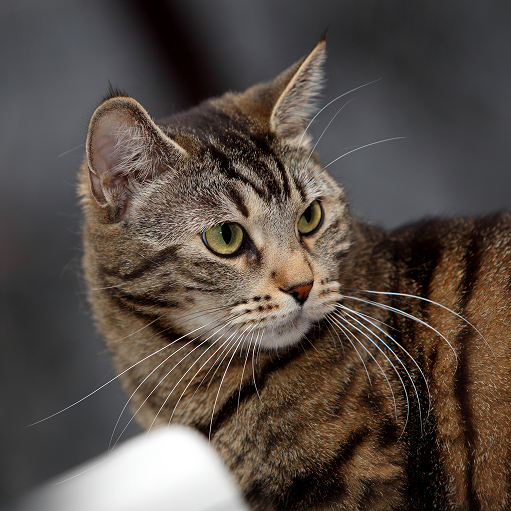
Lethargy, weight gain, changes in the coat, and reduced activity are signs often associated with aging in cats. However, these findings may also indicate an endocrine disorder that is still not widely recognized in feline medicine: spontaneous primary hypothyroidism.
Although it is considered a rare endocrine disorder in adult cats, new evidence suggests that the condition may be underdiagnosed in routine clinical practice due to its subtle presentation and the difficulty in recognizing its signs.
An international multicenter study published in 2026 in the Journal of Feline Medicine and Surgery, titled “Spontaneous adult-onset primary hypothyroidism in 17 cats”, described 17 confirmed cases of spontaneous primary hypothyroidism in adult cats diagnosed between 2021 and 2025 at specialized centers in Brazil, the United States, Argentina, and Italy.
The study represents one of the largest case series ever published on this condition and expands our understanding of an endocrinopathy that still poses significant diagnostic challenges.
Symptoms of Hypothyroidism in Adult Cats
Feline hypothyroidism can go unnoticed because its clinical signs are often nonspecific and develop slowly.
Unlike dogs, in which hypothyroidism typically presents with more characteristic symptoms, cats may develop changes that are easily attributed to aging or other systemic diseases.
The main findings described in the study include:
- Lethargy;
- Weight gain;
- Dull or poor-quality coat;
- Decreased physical activity;
- Mild metabolic changes;
- Gradual behavioral changes.
When evaluated in conjunction with the clinical history and laboratory tests, these signs may indicate the need to investigate hormonal abnormalities in adult cats.
How is feline hypothyroidism diagnosed?
The diagnosis of hypothyroidism in cats requires a comprehensive evaluation that takes into account clinical signs, the patient's history, and hormone tests.
One of the key points highlighted by the study is that certain findings may steer the investigation toward other diseases, causing thyroid dysfunction to remain a less-considered possibility.
These situations include:
Azotemia of unknown cause
Some patients exhibited renal abnormalities that could suggest chronic kidney disease. However, metabolic abnormalities associated with hypothyroidism can affect renal function and should be taken into account during the evaluation.
Diabetes mellitus that is difficult to control
Hormonal changes can interfere with energy metabolism and affect the clinical course of patients with diabetes.
In cats with diabetes mellitus and a suboptimal response to treatment, evaluating thyroid function can help explain the clinical picture.
Changes in the thyroid gland
Some patients presented with an enlarged thyroid gland, underscoring the importance of a comprehensive evaluation of the thyroid axis.
Which test should be ordered to diagnose hypothyroidism in cats?
Hormone testing is a crucial step in diagnosing feline hypothyroidism. Although total T4 is one of the main tests used to assess thyroid function, interpreting this test alone may not be sufficient to identify all patients.
In some cases, the values may remain close to the lower reference limits or show slight decreases, making it essential to evaluate them in conjunction with the feline TSH and correlation with the clinical history, the patient’s signs, and other laboratory findings.
Therefore, the association between total T4 and feline TSH improves the ability to identify abnormalities consistent with primary hypothyroidism and contributes to a more comprehensive and accurate hormonal evaluation.
At Hormonalle, the total T4 and feline TSH are performed using species-specific methodologies, with technical rigor at every stage of the process and interpretation tailored to the veterinary endocrinology practice, providing greater reliability for the diagnosis of thyroid diseases in cats.
Not sure which test to request?
Total T4 and Feline TSH: Why Are These Tests Important?
The combined evaluation of these markers allows for a more comprehensive assessment of thyroid function.
In clinical practice, the value of a hormone test lies not only in the result itself, but in the relationship between the laboratory findings, the patient’s symptoms, and the clinical suspicion.
This approach is essential for avoiding misinterpretations and improving diagnostic accuracy.
Where can I have my cat's hormone tests done?
Specializing in veterinary endocrinology, Hormonalle offers a comprehensive range of hormonal tests for dogs, cats, and horses, supporting veterinarians in the diagnosis of endocrine diseases in small animals.
By combining scientific knowledge, validated methodologies, and a team of specialized technicians, Hormonalle contributes to more accurate hormonal diagnoses and more reliable clinical decision-making throughout the entire field of veterinary endocrinology.
Do you need guidance on how to submit your test results?
What does this study contribute to feline medicine?
Feline hypothyroidism is still considered a rare condition, but current data underscore the importance of broadening clinical suspicion.
The identification of subtle signs, combined with appropriate hormonal testing, can lead to the diagnosis of patients whose condition would otherwise go unrecognized.
More than just identifying a laboratory abnormality, the challenge lies in understanding how hormones influence the body's functioning and affect the patient's health.
Access the full study
The scientific article on which this content is based is available at:
Bibliographic reference
Cobucci GC, Teyssandier S, Tavares FM, Rosa MMF, Fracassi F, Geraldo Júnior CA, Bueno CAD, Jardim MPB, Lourenço FS, Miceli DD, García JD, Soler Arias EA, Peterson ME. Spontaneous adult-onset primary hypothyroidism in 17 cats. Journal of Feline Medicine and Surgery. 2026.
Is hypothyroidism common in cats?
It is considered a rare endocrine disorder in adult cats, but recent evidence suggests that it may be underdiagnosed, since the signs are often subtle and develop slowly, making them easily mistaken for normal aging.
What are the signs of hypothyroidism in cats?
The main findings include lethargy, weight gain, a dull or poor-quality coat, reduced physical activity, subtle metabolic changes, and progressive behavioral changes—unlike in dogs, where the signs are usually more characteristic.
Which test confirms hypothyroidism in cats?
A combined assessment of total T4 and feline TSH is the most appropriate approach. Total T4 alone may not be sufficient, since in some cases the levels are close to the lower limit of the reference range; combining it with feline TSH and the clinical history improves the accuracy of the diagnosis.
Can feline hypothyroidism be mistaken for other diseases?
Yes. The study indicates that these cases may be mistaken for chronic kidney disease (azotemia without an obvious cause) or make it difficult to manage diabetic cats, which underscores the importance of evaluating thyroid function even when the clinical picture seems to point to another cause.
Do you need assistance with hormonal testing in feline patients?
Talk to our technical team and receive expert guidance on requesting tests and the diagnostic process.